
Intersecting Nature
Ecology of the Urban Nearby
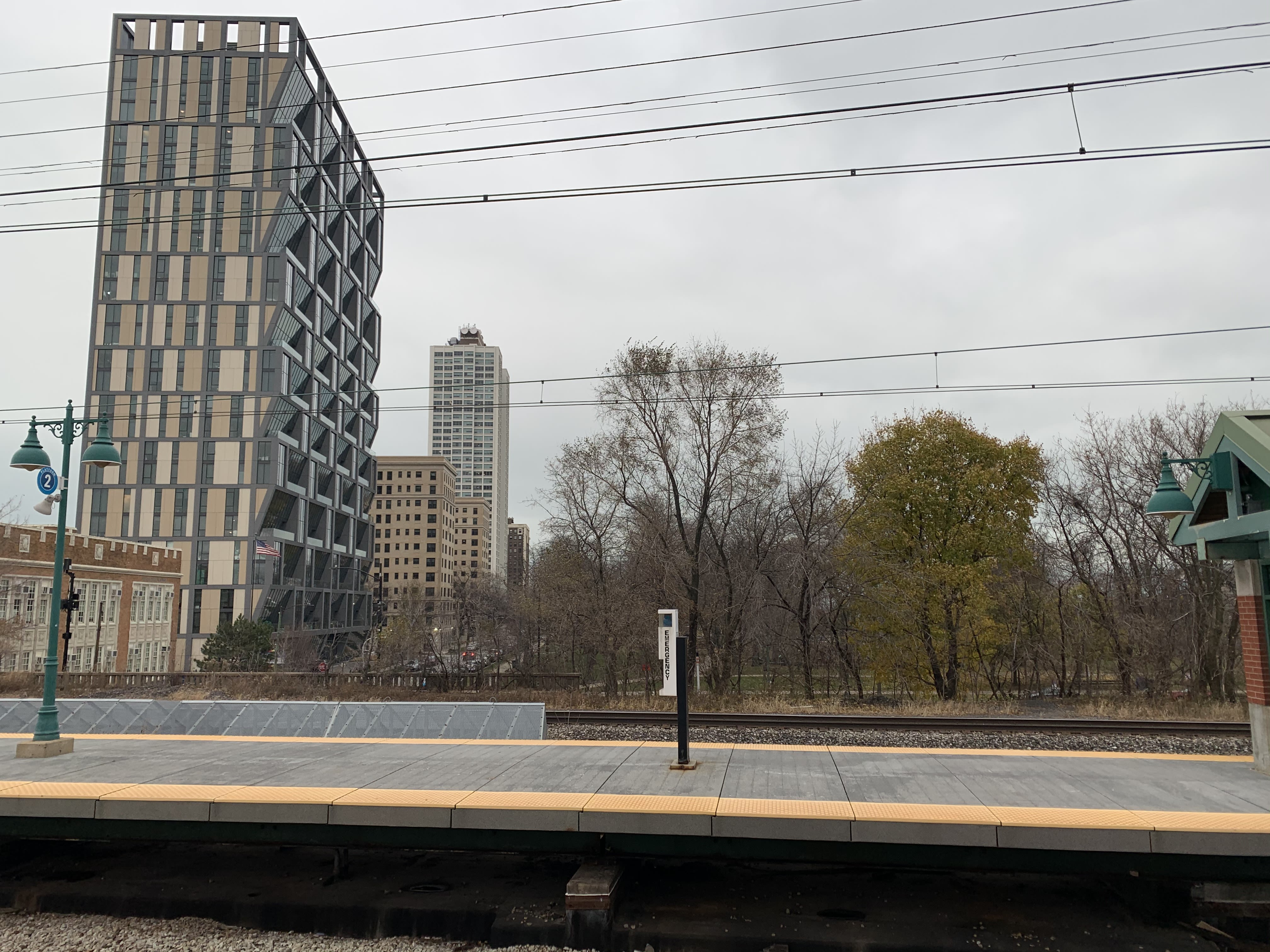
Just several blocks from my home in East Hyde Park, lies an intersection of ecological practices spanning decades of care and neglect, intention and spontaneity. It's also the intersection of East 56th Street and South Stony Island Avenue, the northwest corner of Jackson Park, and an entrance to the 55th-56th-57th Metra train station.
Over the course of 10 weeks, I observed and photographed a Norway maple tree growing out of a gravel bank to the east of the train tracks. Observations of the tree and its surroundings help tell the modern natural history of my home in East Hyde Park.




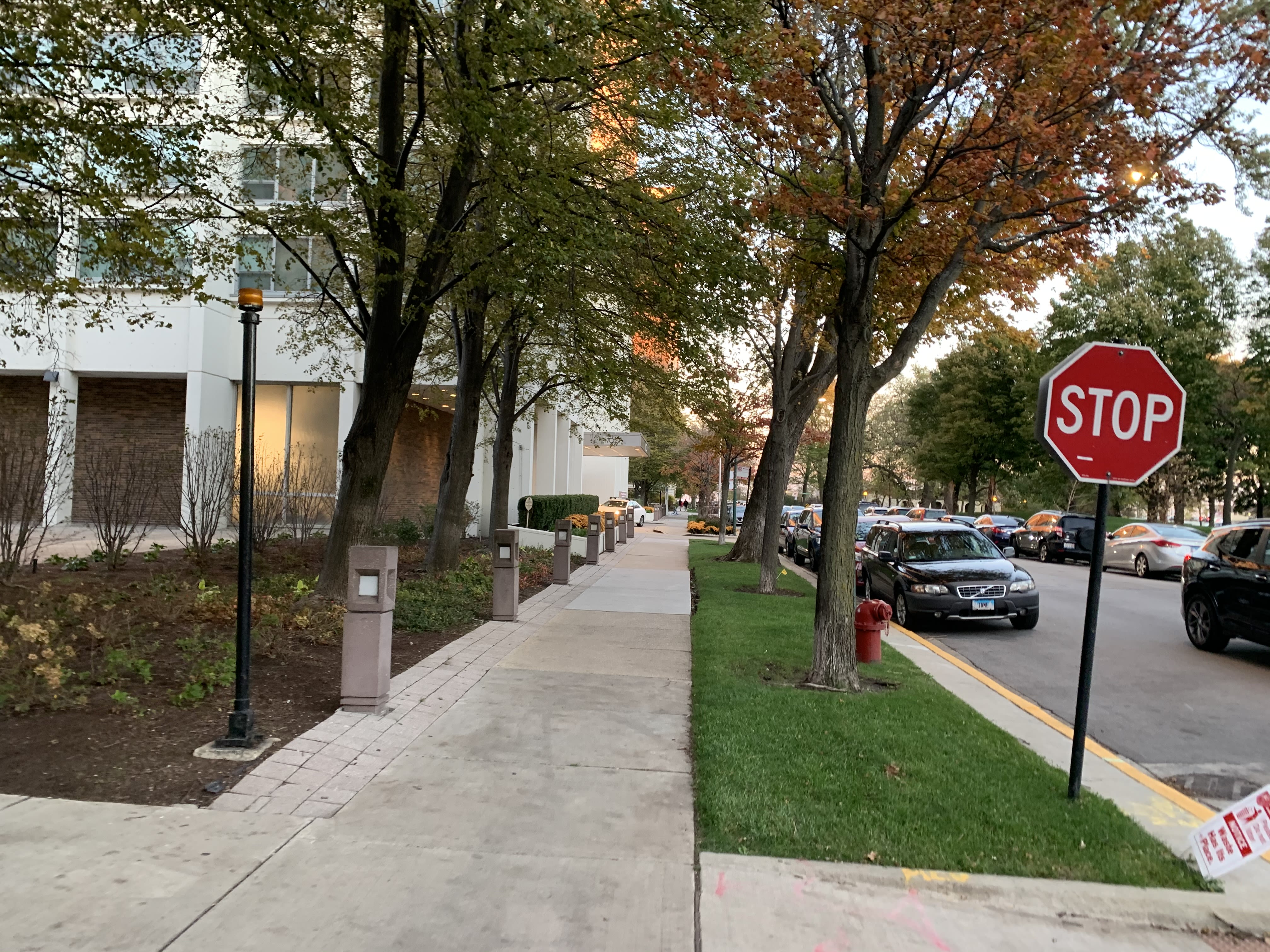

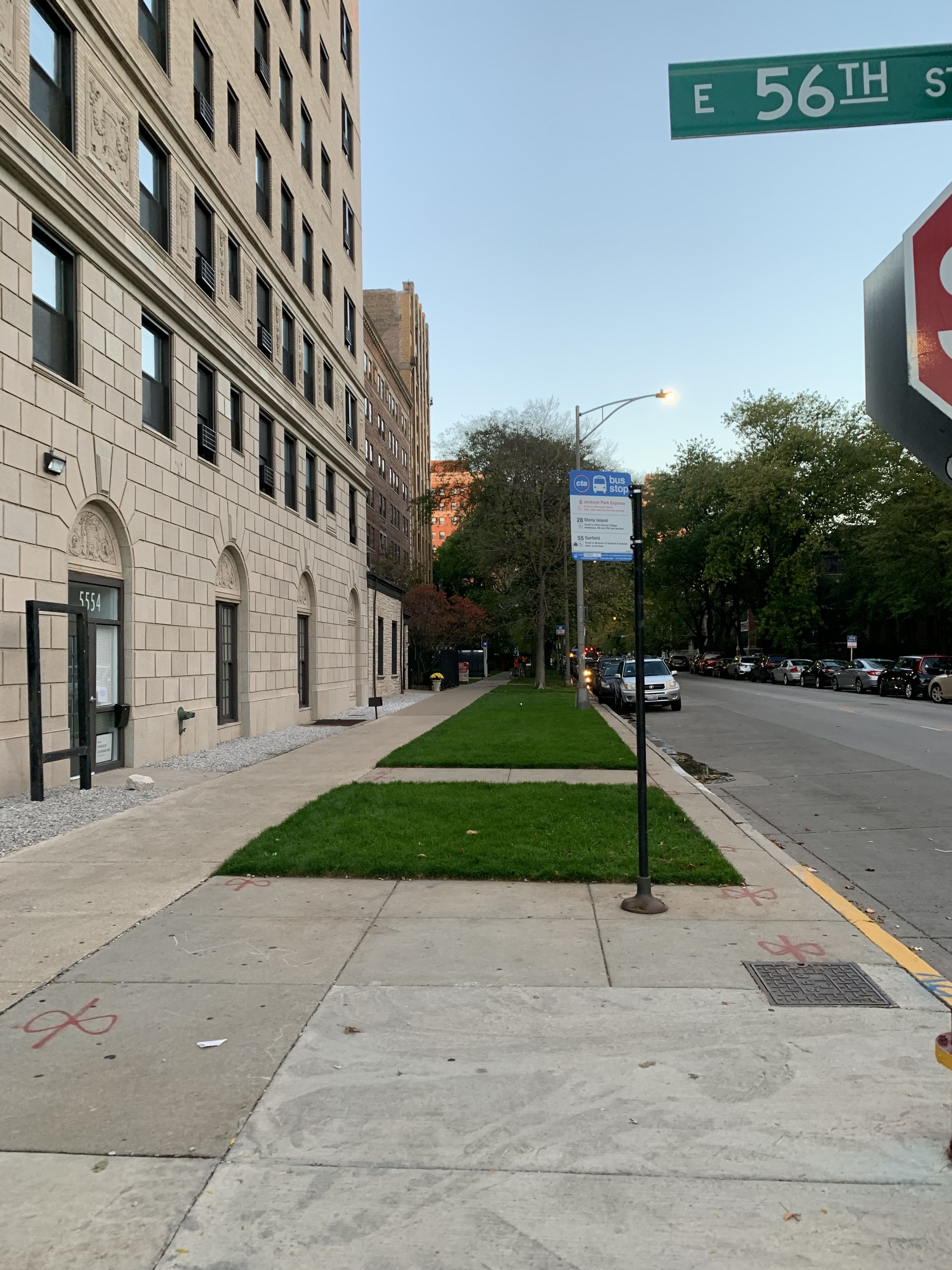

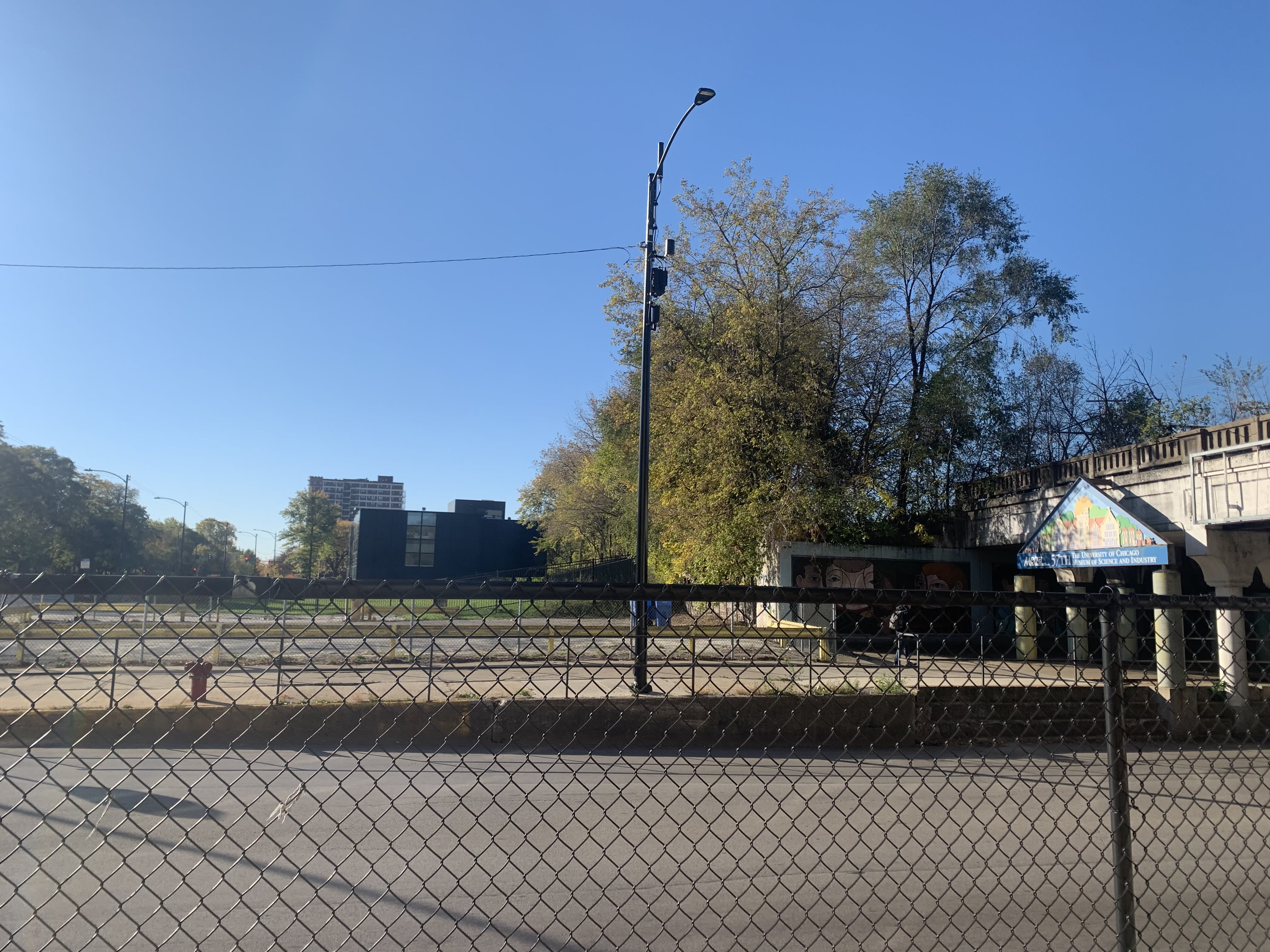

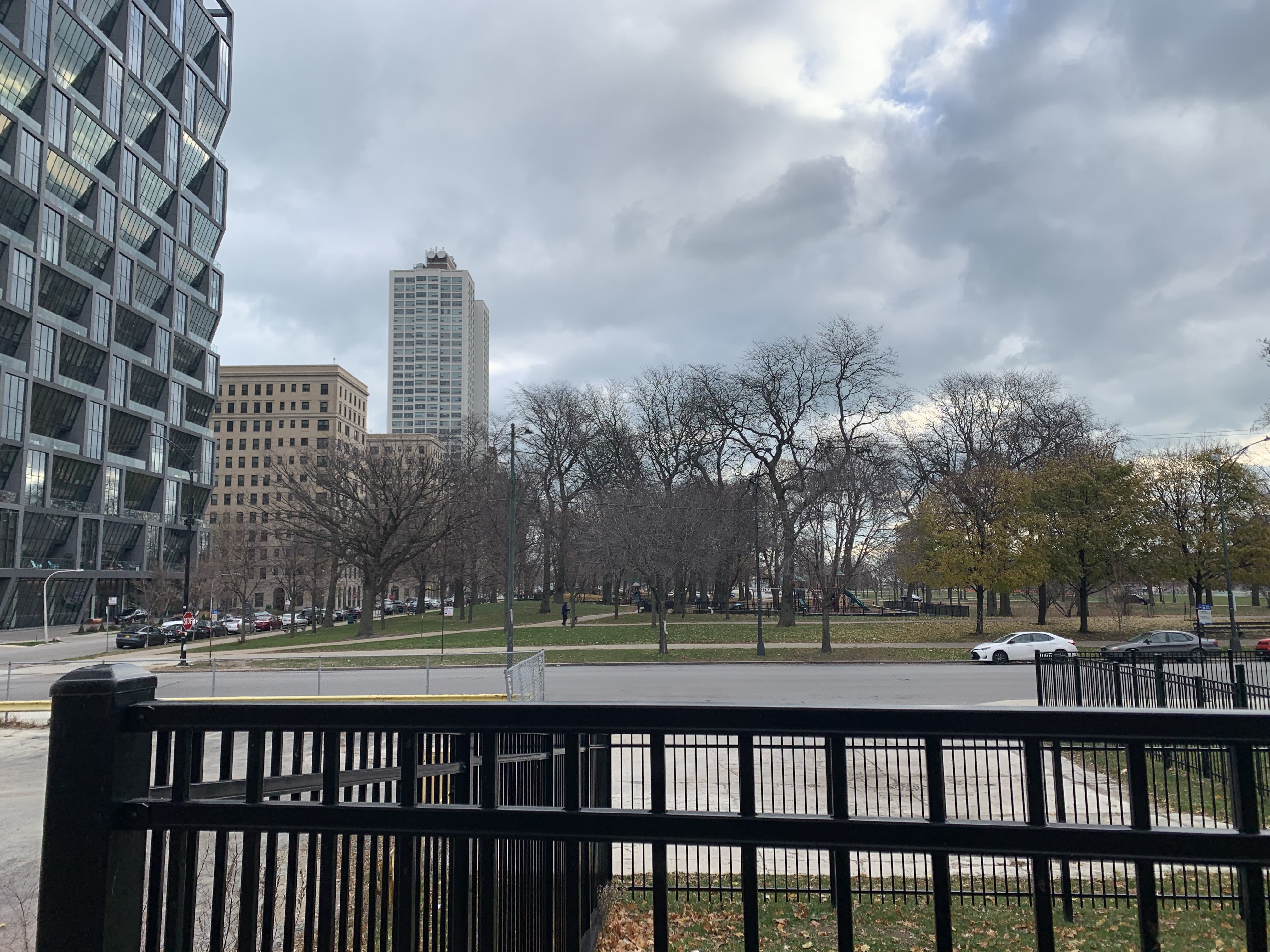


Norway maples are an abundant invasive species in North America coming originally from Northern Europe and Western Asia. Their shallow roots and hardiness in shady or low sunlight conditions allow them to grow everywhere from existing dense forests to harsh urban and industrial landscapes, such as the gravel bank next to train tracks (New York Invasive Species Information).
Norway maples form a dense leaf canopy and provide ample shade. This same feature which once made Norway maples attractive shade trees in yards and along streets also prevents understory growth and makes them a tenacious invader. One study found that Norway maple saplings grow faster in the understory layer than sugar maple saplings (Martin 1999). Not only do Norway maples outcompete native sugar maples, but also their shady understory is uninhabitable for many kinds of ground vegetation and other biodiversity important to the forest ecosystem.
Norway maple saplings are so hardy in dense, low-sunlight environments that they were the focal species of one paper which aimed to debunk the popular “myth of the resilient forest” which supposes that intact or complete ecosystems composed of native species are resilient to invasive species and other environmental change and stressors (Webb et al. 2000).
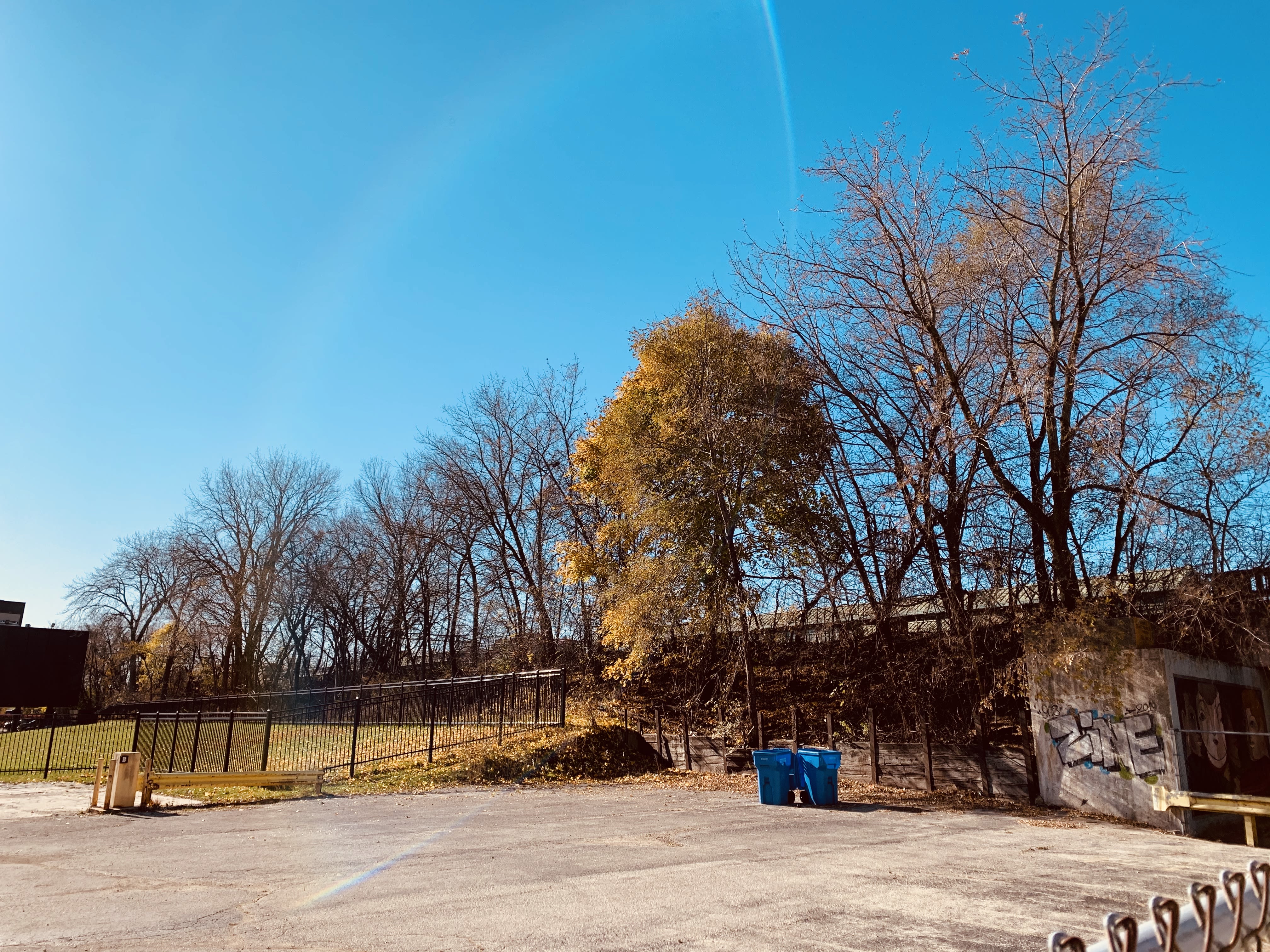
Authors Webb et al. found that the shade tolerance of Norway Maple saplings allowed them to penetrate mature forests, taking root in the understory of native species. In addition to the Norway maple’s higher shade tolerance compared to sugar maples, the Norway boasts other ecological advantages such as faster rate of photosynthesis and longer retention of the leaves in the fall (Kloeppel and Abrams 1995), which explains why the canopy of my Norway maple remained green and full into November after all surrounding trees had dropped their leaves (shown in the photo on the left taken Nov 14th, 2021).
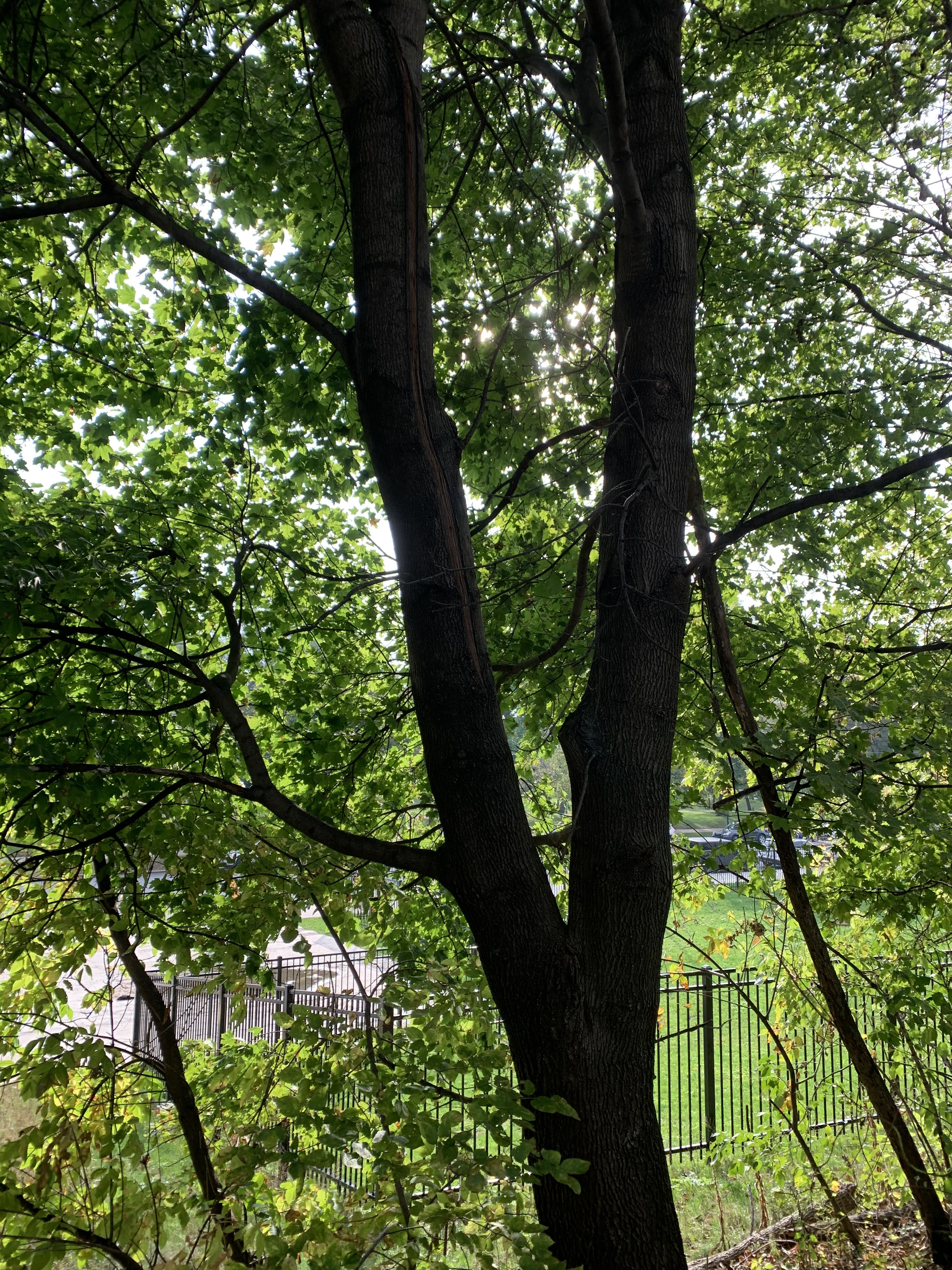
The dense and shady canopy of my Norway Maple
The dense and shady canopy of my Norway Maple
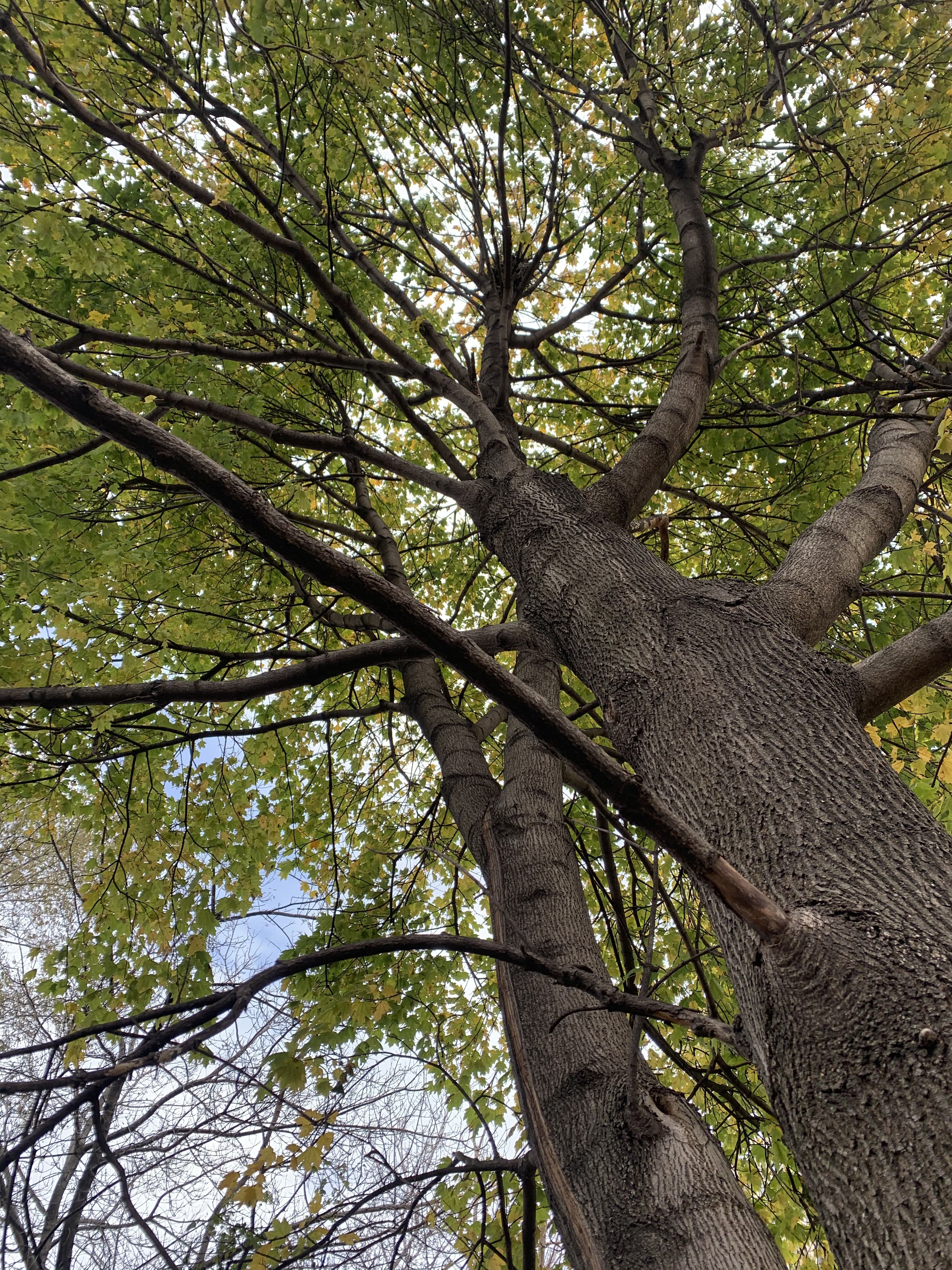
The dense and shady canopy of my Norway Maple
The dense and shady canopy of my Norway Maple
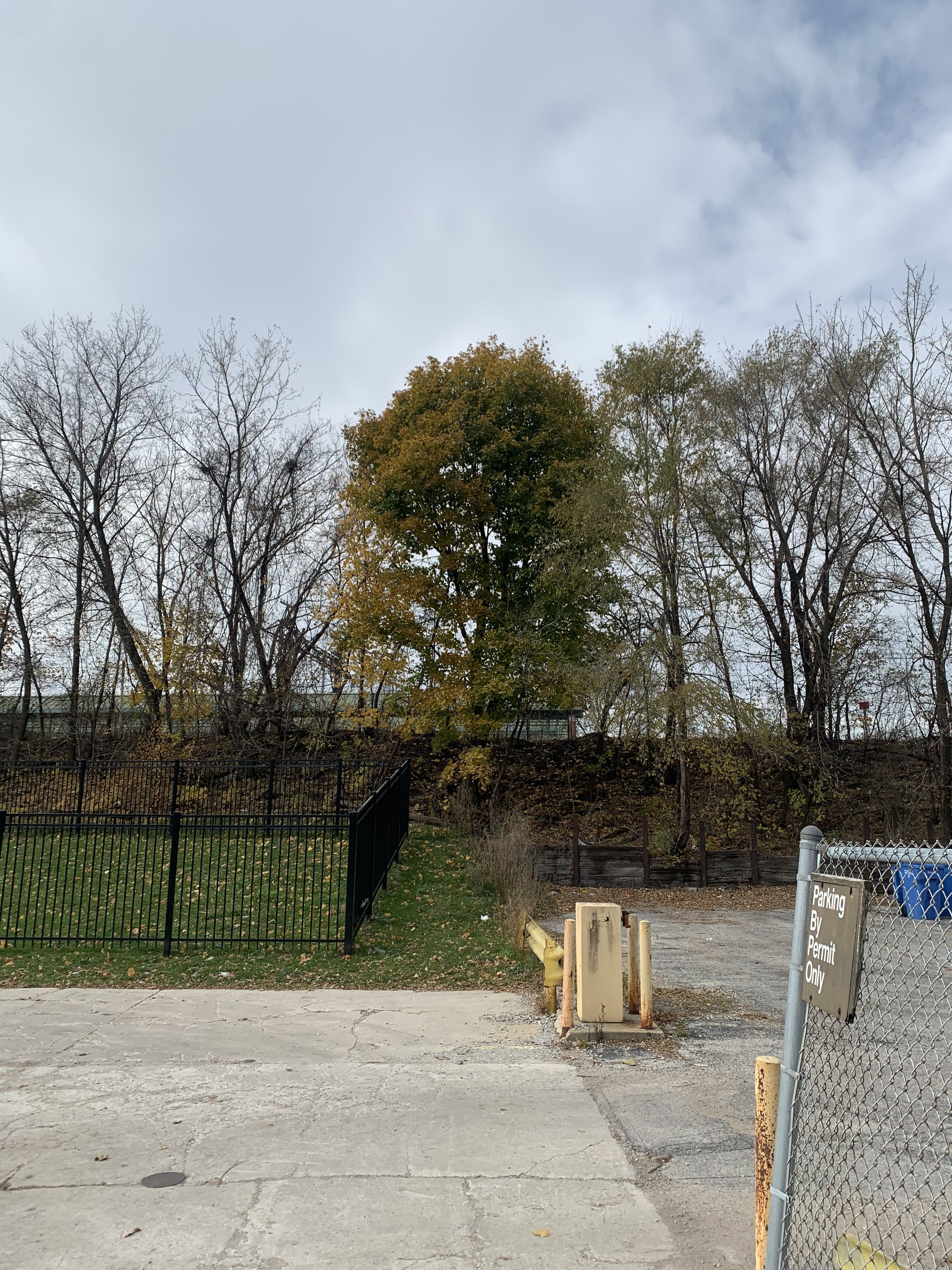
The Norway maple retains green leaves into late November
The Norway maple retains green leaves into late November
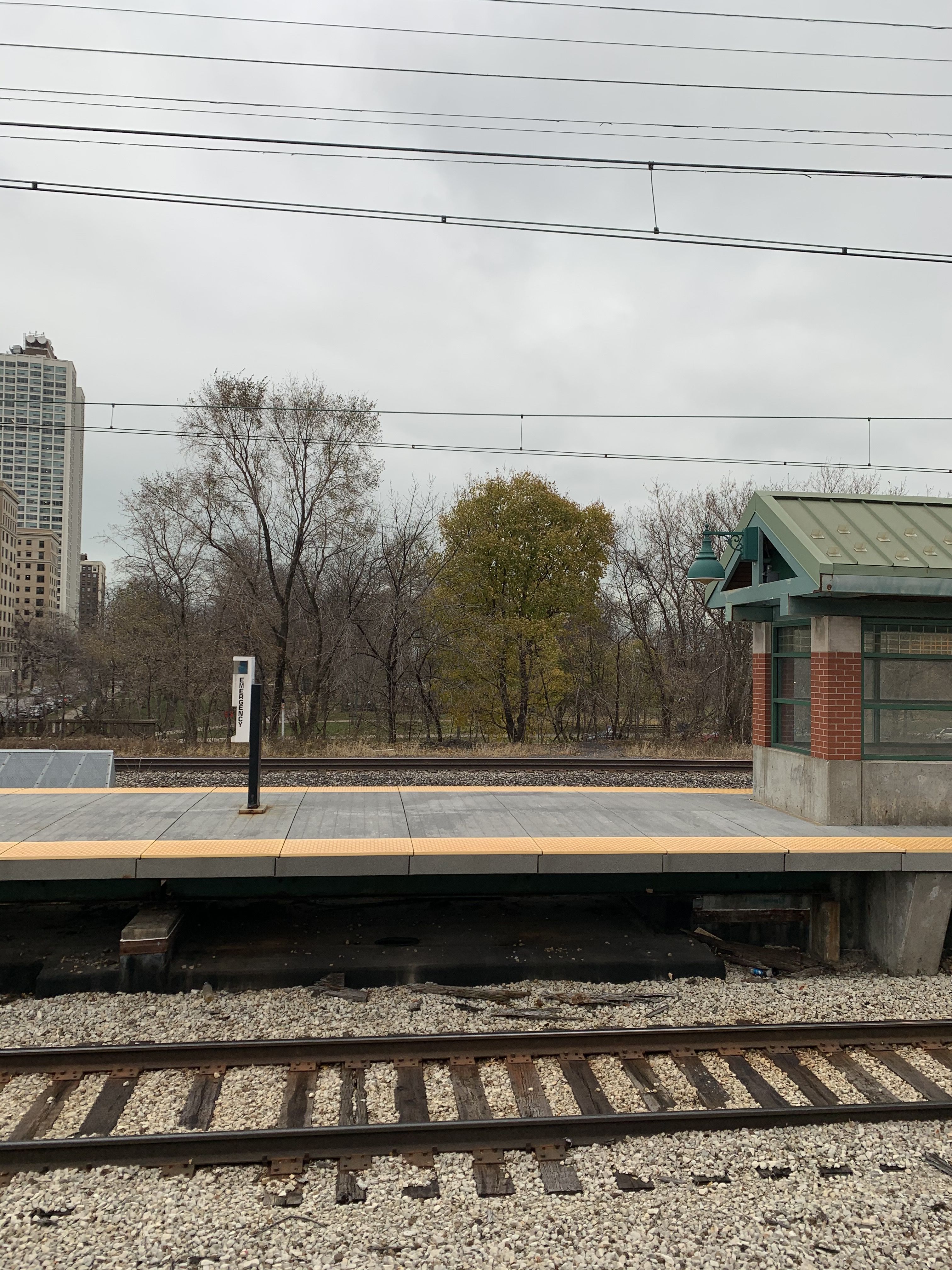
My Norway Maple seen from the 55th-56th-57th St Metra station platform
My Norway Maple seen from the 55th-56th-57th St Metra station platform
Somewhat contrary to the findings of Webb et al. 2000, which emphasize the Norway Maple’s ability to compete and invade in even pristine forests thanks to their biological and physiological advantages, a 1999 study by Rebecca Anderson finds that human activity is a crucial factor in helping Norway maples grow and spread in forests. Whereas Norway maples were more frequently found near paths and roads, the frequency of native sugar maples was not found to vary according to proximity to human activity. Anderson concludes that edges with human activity such as paths and roads create entry points into ecosystems which could compromise their resilience to invaders.
At my site, there was likely little canopy to begin with, and the high shade tolerance would not necessarily have benefited the Norway Maple over another species. However in the shallow soil and gravel, it would have benefited from a shallower root system. Opportunities for the spread of invasive seeds abound from traffic on the street and train tracks from cars, buses, service vehicles, and of course trains.
The Understory

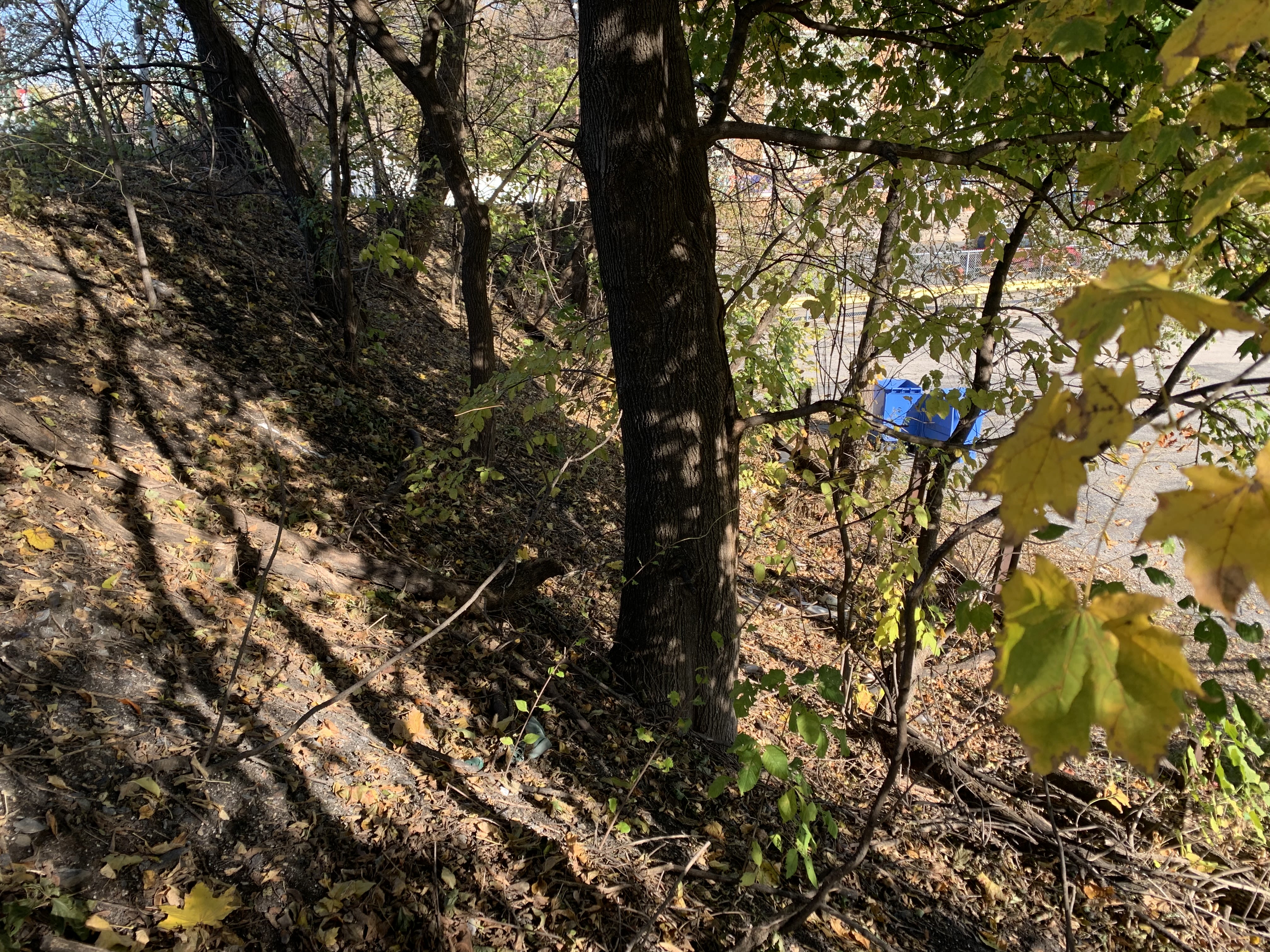
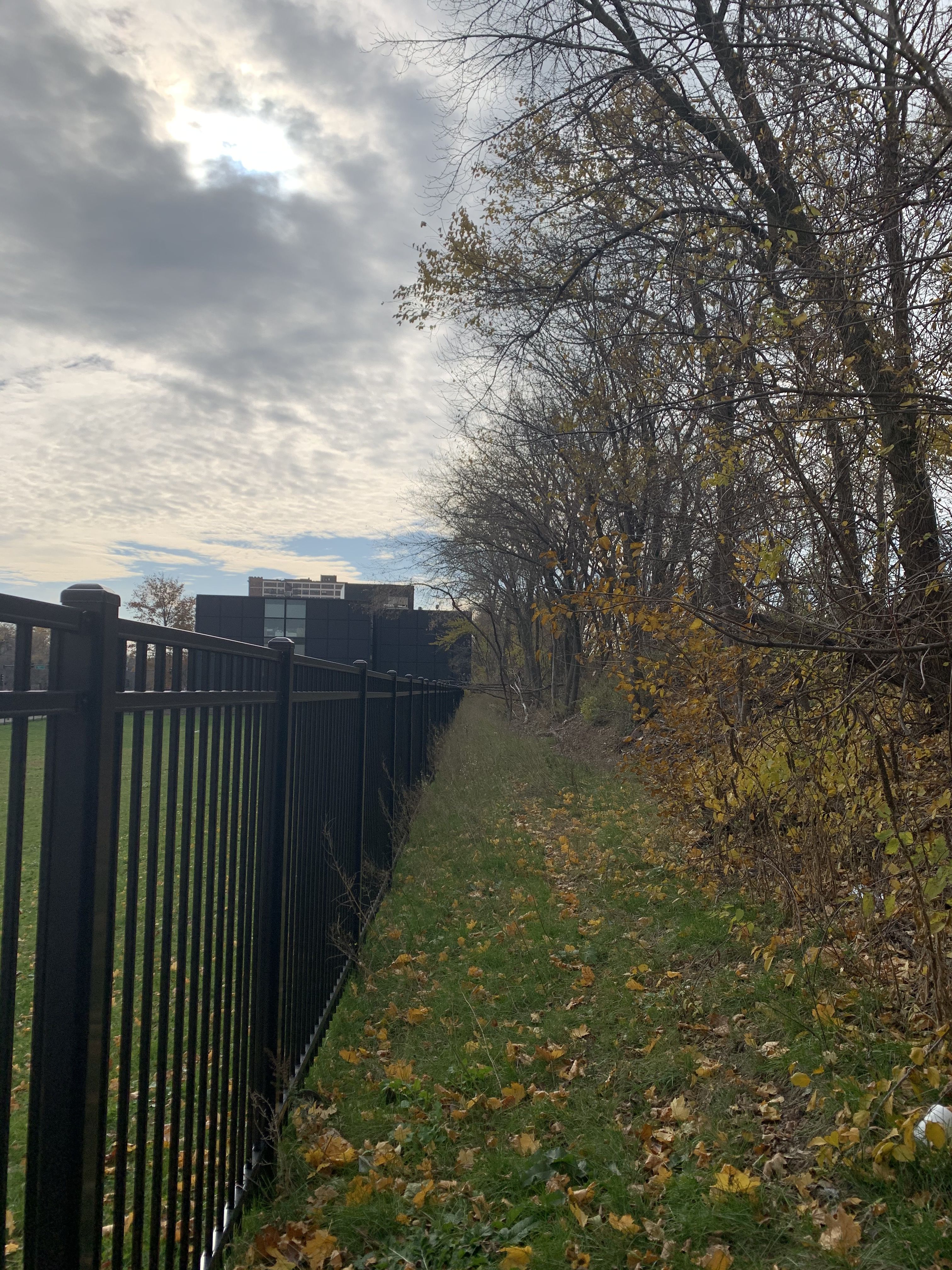
The soil in the understory of my Norway maple and a bit north, in the shadow of the tree, is especially thin and loose compared to the surrounding areas.
Elsewhere along the gravel bank, thicker vegetation prevents erosion and allows leaves and other organic matter to collect on the slope instead of falling to the bottom.
The steepness and loose gravel and soil makes the slope under the canopy difficult to climb. I noticed across my weekly visits that recent temperatures and precipitation affected the firmness of the ground and ease of climbing.
Though I never would have thought of it beforehand, the ground turned out to be most stable not when it was completely dry, but when it was moderately damp, since the dry soil was so loose that it was easy to slide on top. Too much precipitation and the slope became muddy and slick.
Though most pedestrians and potential visitors to the area are likely deterred by the overgrown, unmaintained ugliness, someone seeking privacy and shelter in the urban environment may benefit from the lack of attention or interest in the area.
As autumn progressed and the vegetation thinned, I noticed a collection of crates, tarps, and other objects that suggests that someone might have been living in the vegetation just south of my tree at one point.
They might have found shelter indirectly from the Norway maple, but likely benefited more from the other species in the area, especially the areas of denser vegetation where the ground was softer and better insulated from a thicker and more stable layer of soil.
The understory and surrounding area is also home to animal species. The most abundant species in early fall was a red and black Boxelder nymph.
Boxelder nymphs can be seen in late fall, as late as November 8th, when this photo was taken, but they are unlikely survive the winter.
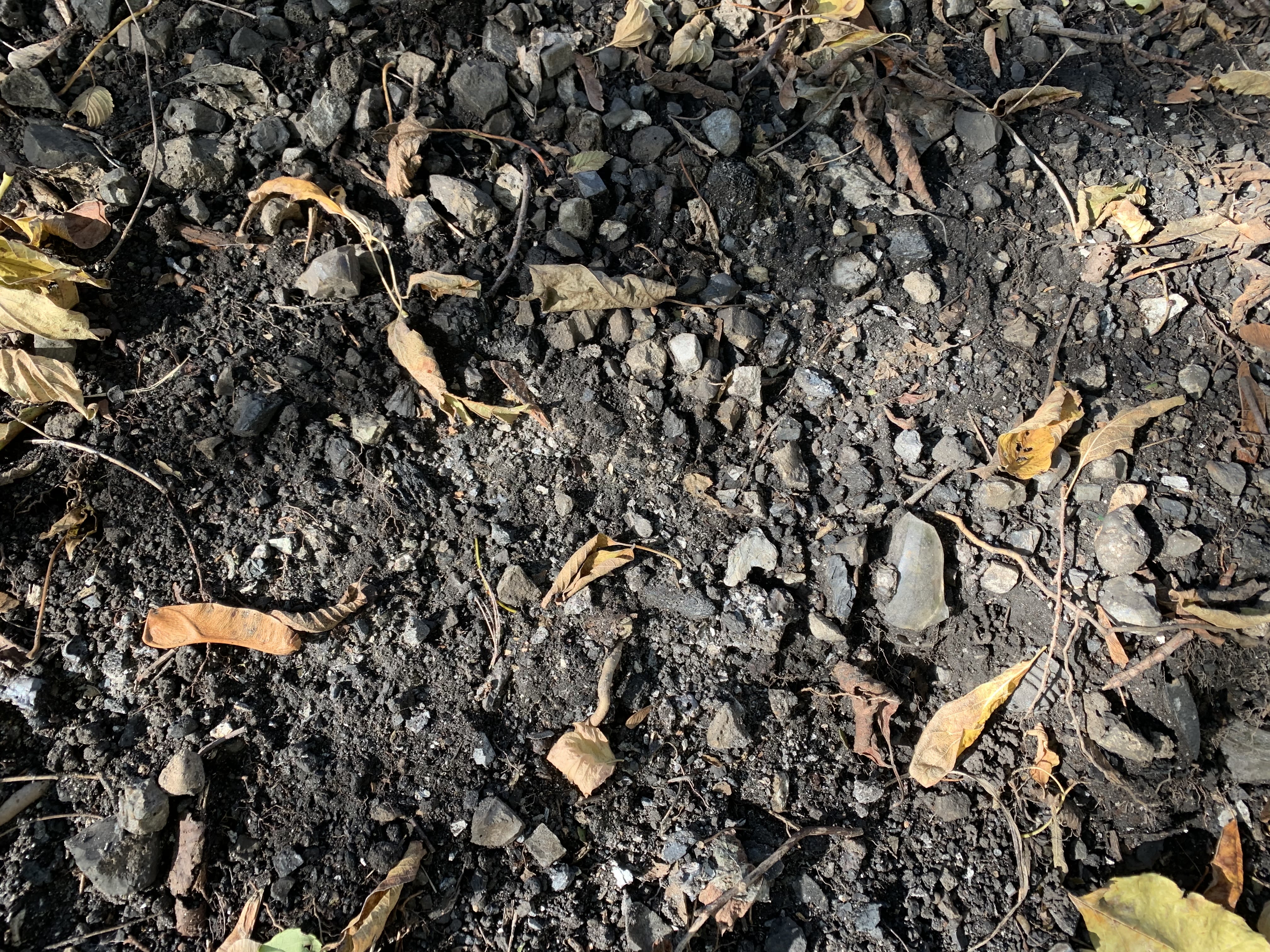
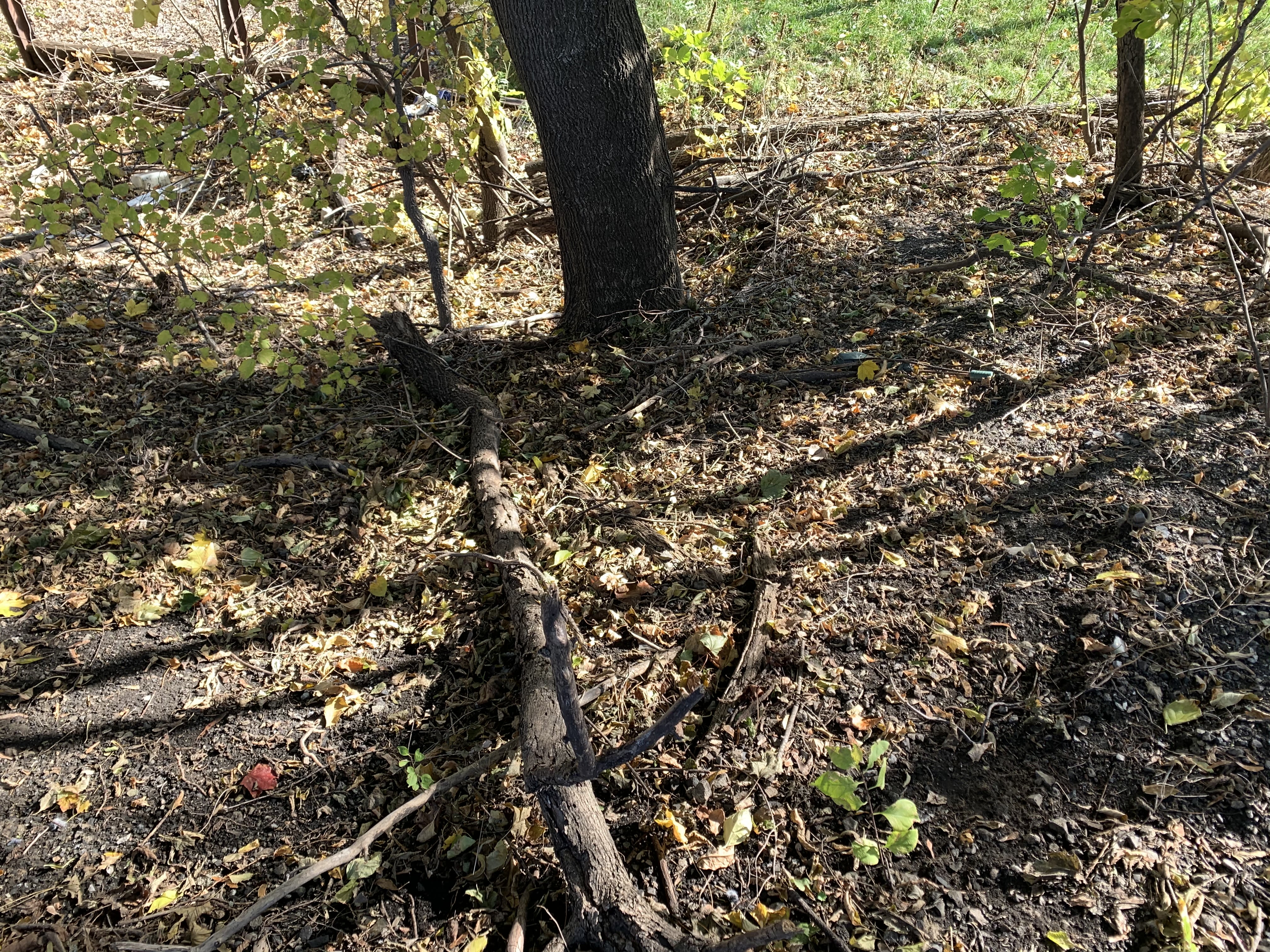
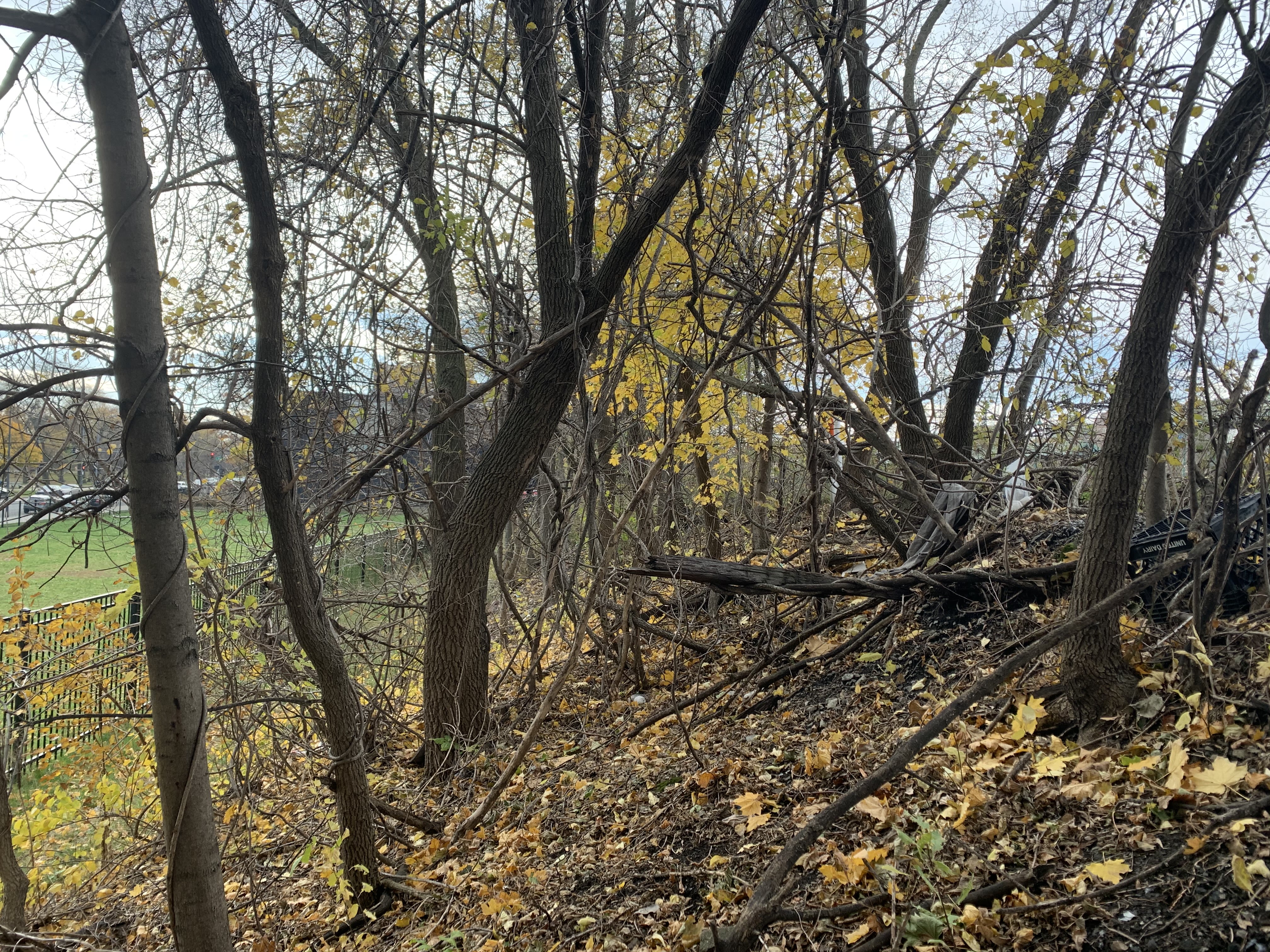
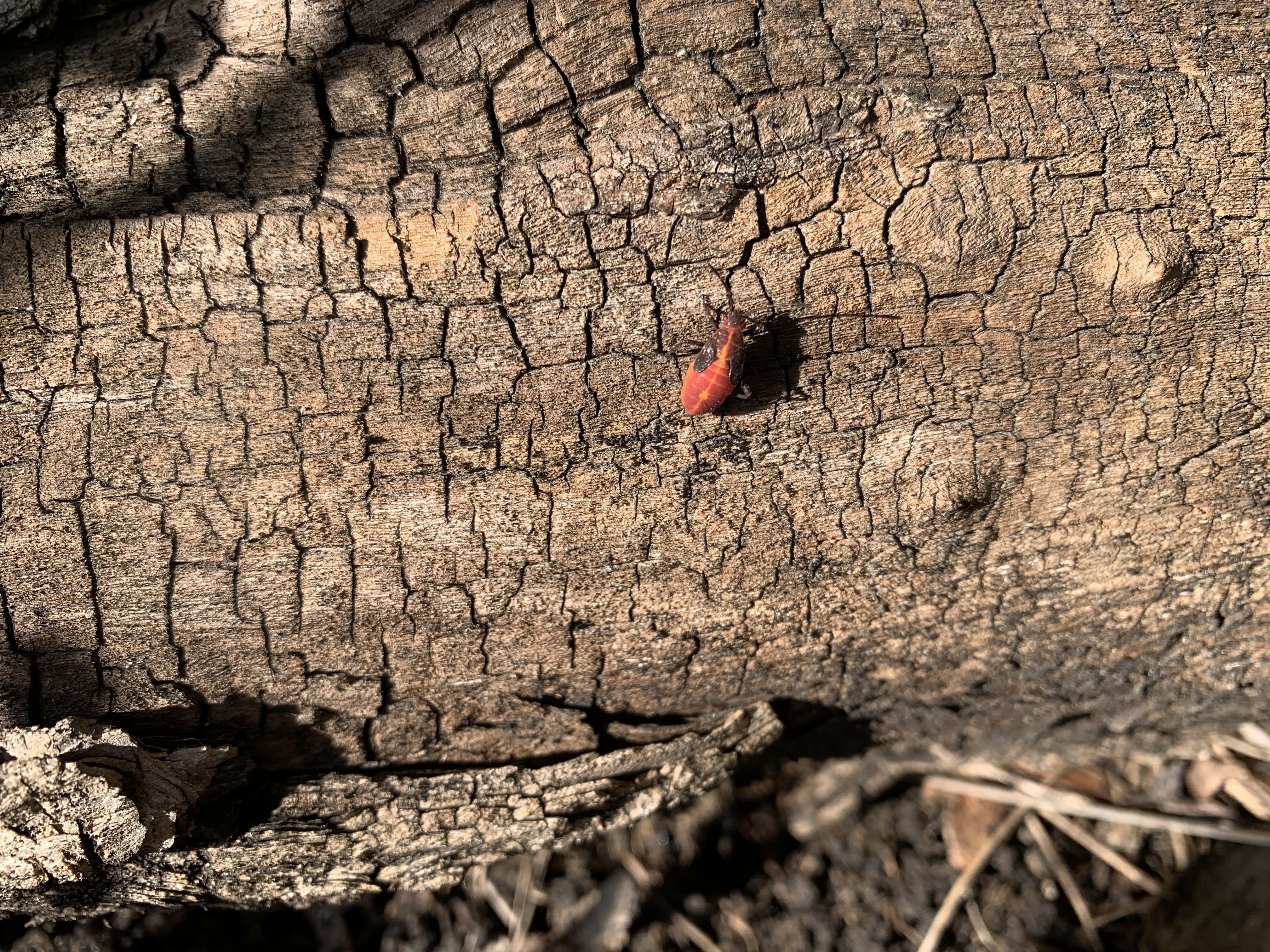
In late November, after the surrounding trees had dropped their leaves and the Norway maple had dropped about half of its own, the ground was almost entirely golden yellow. I realized that the leaves were telling stories of their own.
I noticed that under the Norway maple, because there was almost no vegetation, the leaves fell down the slope and gathered mainly at the bottom.
Whereas elsewhere along the bank, vegetation trapped the leaves where they could decompose and provide habitat and nutrients to the ecosystem, the slope combined with the impenetrable canopy exacerbated the invasive effects of the Norway Maple.
The leaves also gathered under the fence and along both sides of the retaining wall made from spare rail and railroad ties.
Over the course of several of my visits in November I observed that the soil elsewhere along the bank, was deeper, less rocky and retained moisture longer (possibly owing to its depth) than the soil under the Norway Maple.
The resilience to erosion and greater quantity of decomposing material provided and retained in more vegetated areas could explain differences in soil along the Metra tracks.
History
City in a Garden

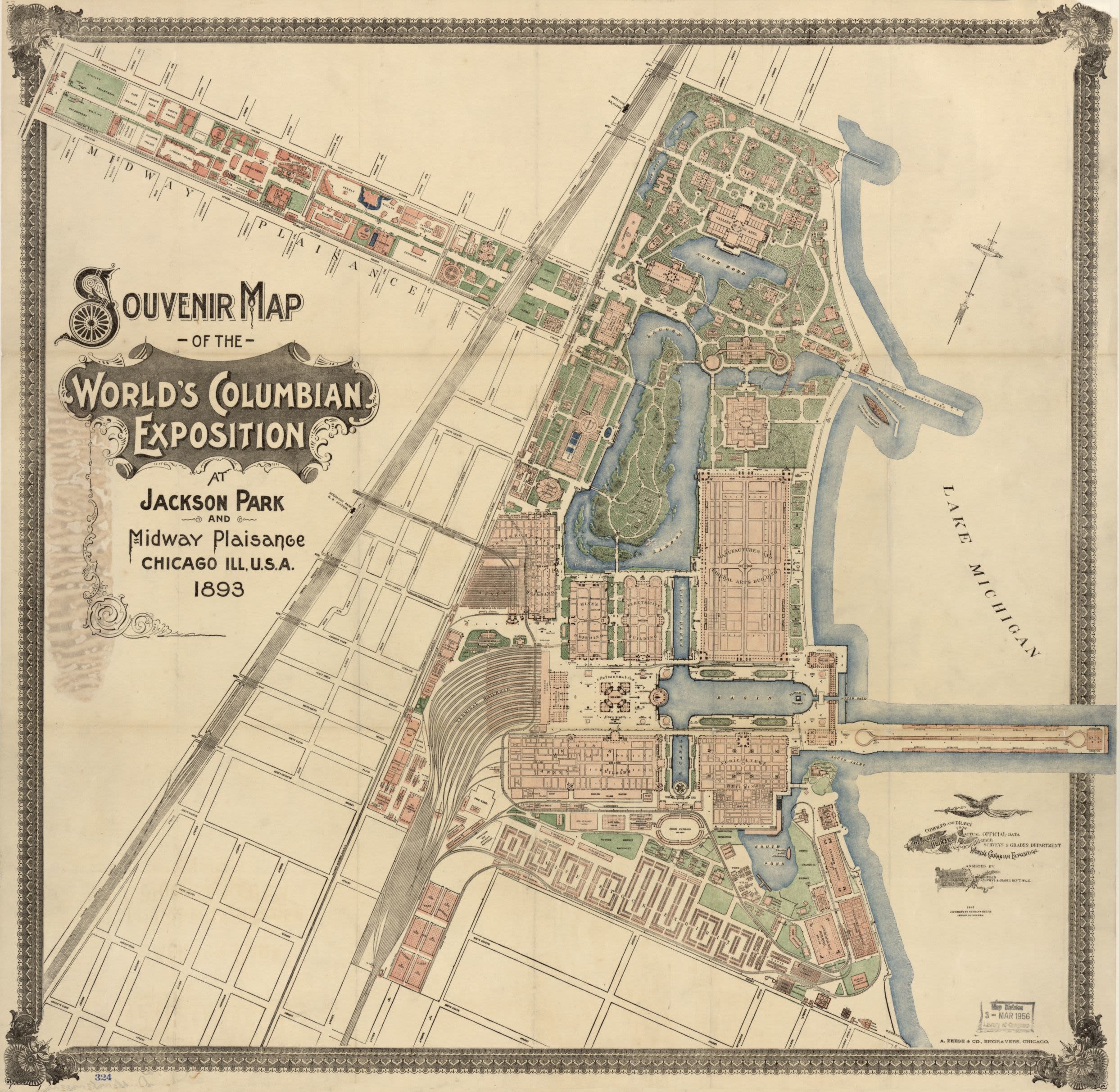
Nature in my nearby is dominated by Jackson Park, one of the largest parks in the Chicago park district. It contains a large lagoon and nature preserve called Bobolink meadow which provide habitat for a diversity of bird and other species.
Though it might be easy to imagine parts of Jackson Park as remnants of pristine ecosystems, most of the land that makes up Jackson Park was created out of marshlands in preparation for the 1893 World's Columbian Exposition which took place on the site.
Buildings, streets, rails, gardens, and other attractions covered the more than 600 acres that today make up Jackson Park and the Midway Plaisance. The only permanent building remaining, once the art museum for the fair, is now the Museum of Science and Industry at the North edge of the Lagoon.

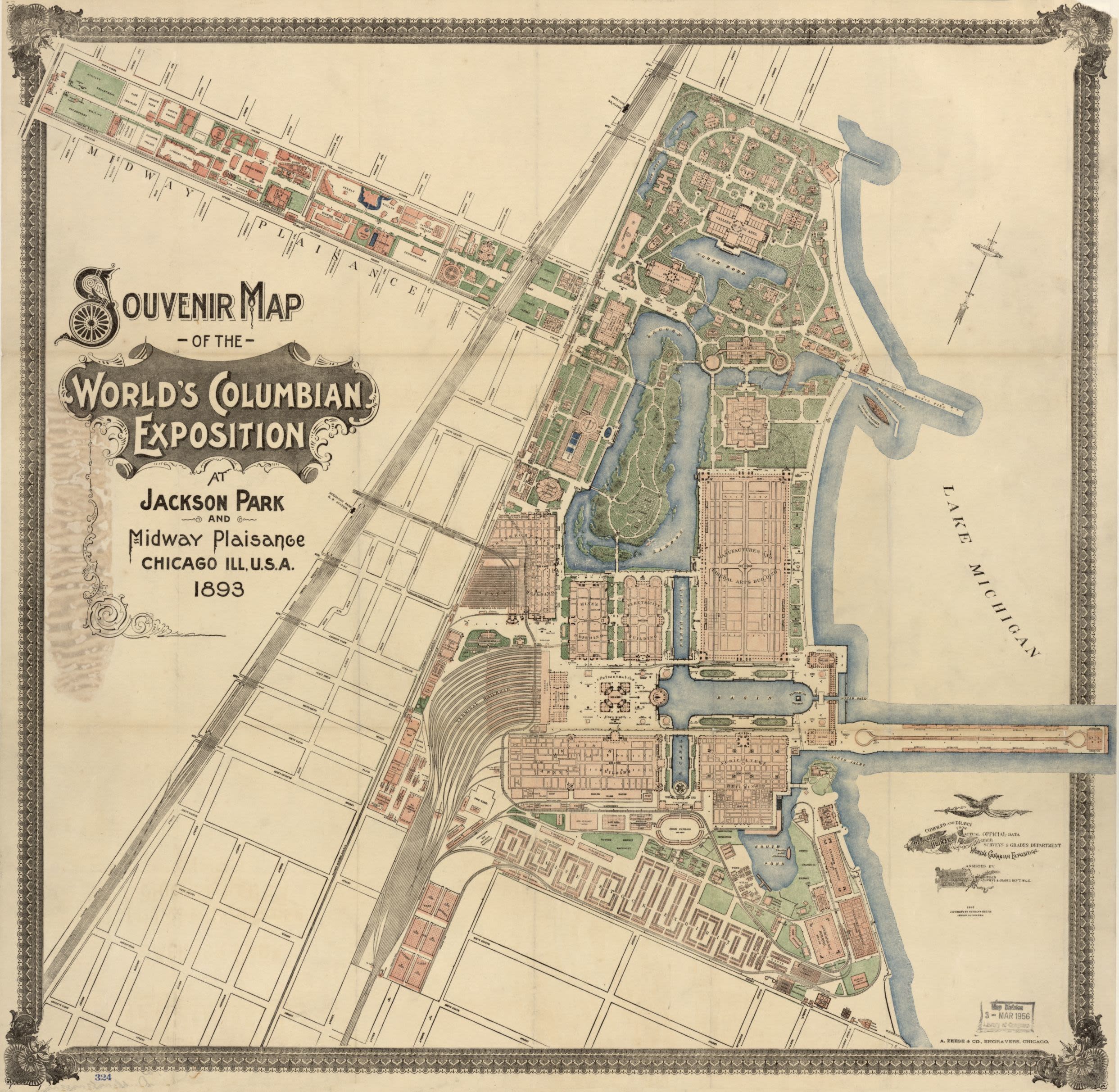
None of the pristine marsh ecosystem which once dominated the area remains in Jackson park today. Instead the natural areas in Jackson Park today consist of woodlands and meadows that have been carefully cultivated and maintained since the Columbian Exposition.
Following the fair, all the temporary buildings were dismantled, leaving only the present day Museum of Science in industry. The question of what to do with the vast expanse of open land was assigned to the famous landscape architect, Fredrick Law Olmsted, who had already collaborated for Daniel Burnham on the design for the fairgrounds.
Olmsted created an integrated plan for Jackson Park, the Midway Plaisance, and Washington Park to the West which included meandering networks of paths, vast open meadows and pastures, and singular connected water system that ran the length of the midway.
His design emphasizes the role of nature in a healthy and prosperous human life at a time when the dirt and grime of crowded urban living was commonly considered not only physically but also socially and morally deficient.
The plan pays homage to older European landscaping traditions with portions of the parks and midway especially laid out on cardinal axes with geometric symmetry but primarily focuses on vast, awe-inspiring naturalistic, pastoral scenes which served as the ultimate foil to urban living.
For Olmsted, public open space was not only crucial for health and well-being but also for the social functions of democracy. Olmsted saw his parks as places which supplied crucial outlets and opportunities for children and adults to play and recreate together which were missing in strictly work and residential environments. As he saw it, his parks were a literal level playing field to commune with nature and each other.
This 1895 revised plan includes an enormous "Ball Field (for boys and girls)" in the southwest corner of the park

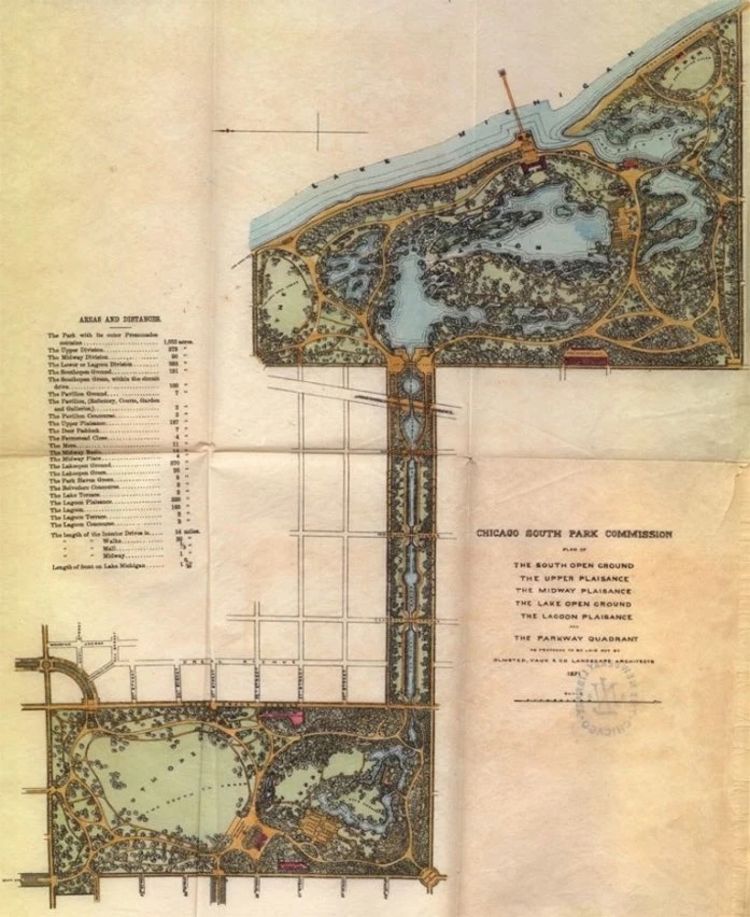

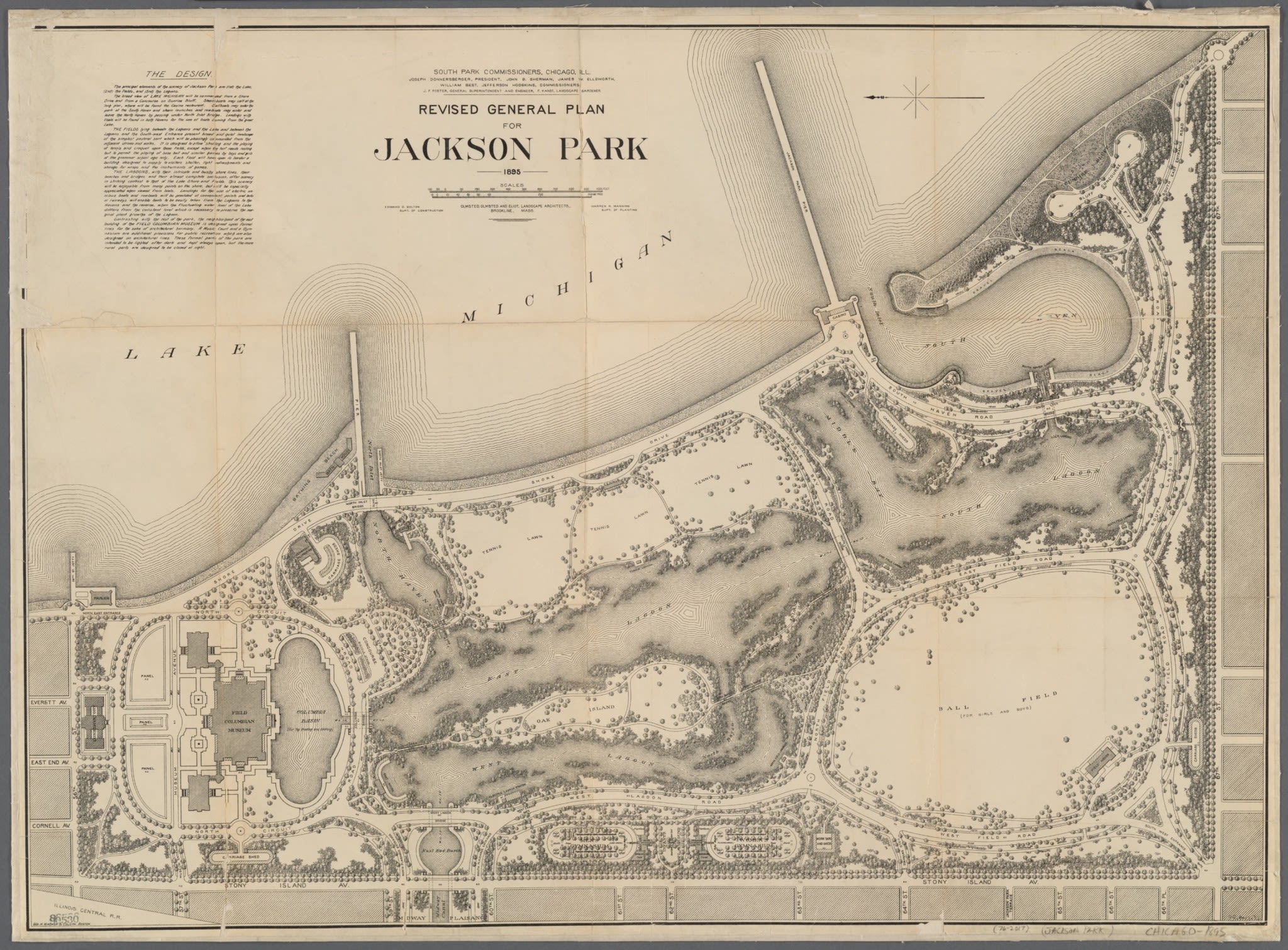
Of course, not all of Olmsted's plans and aspirations endured. Today we have not a ball field for boys and girls, but a sprawling golf course, generally accessible only by specific socio-economic classes. The lagoon is built up with marinas on each entrance to the lake.
Out of all the ways in which the parks and their functions have transformed, perhaps the most striking is the way racial segregation, red lining, and suburbanization in Chicago in the 20th century transformed Jackson Park, the midway, and Washington Park each into racial and socioeconomic boundaries very unlike sites of community and democracy.
The use of the parks as a boundary rather than a place of congregation is partially made possible by the scale of parks which are not commonly crossed and made more inaccessible by busy streets or highways.
Nevertheless the ideas of Olmsted and his contemporaries have endured in more subtle ways in and around Jackson Park.
Grassy areas for recreation shaded by tree canopies make up most of the north end of Jackson Park today as well as the lake shore green areas.
Meandering paths and asymmetrical planting encourage a naturalistic appreciation for the overwhelming vastness of Lake Michigan.
Today the lakefront, especially including promontory point, is a site of gathering and recreation for residents from all over the South side.
While some certainly come to be overwhelmed and commune with the sanctity of nature throughout the changing seasons, plenty of others come for summertime barbecues and parties with loud music.
At the northwest corner of Jackson Park, however, lies a very different scene. Saddled with the same vastness of scale but lacking all of the awesome grandeur, this corner of Jackson Park makes a clumsy transition into the surrounding neighborhood.
The Urban Remainder

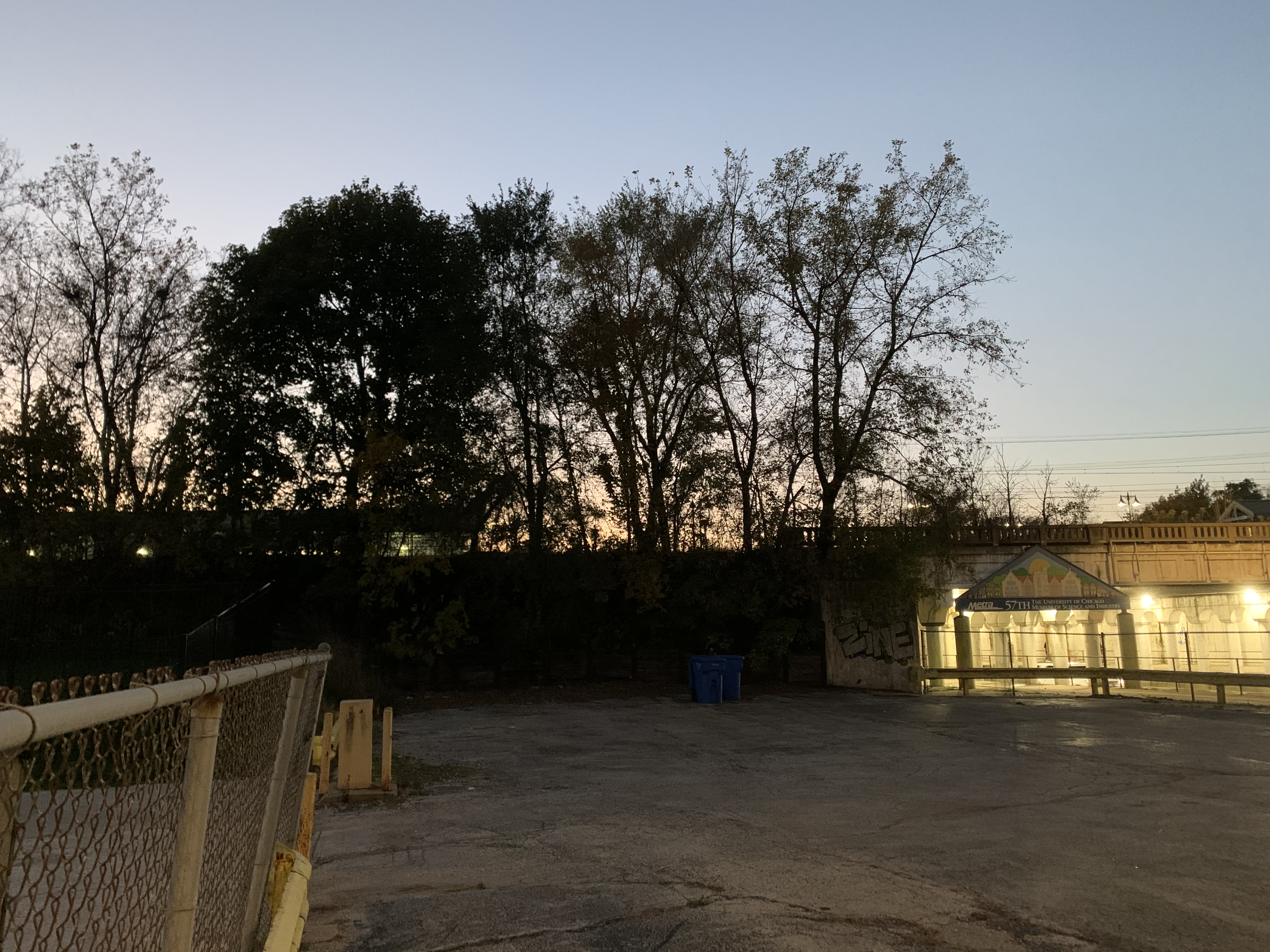
Standing at the corner of 56th St. and Stony Island Ave, one easily forgets the grand plans and idyllic visions for nature and its relation to urban life represented in the history of Jackson Park just across the street.
While landscape architecture and park district maintenance have set out to tackle a variety of ecological and social problems throughout history at the scale of a park (in this case, a massive park) this single intersection, characterized by heterogeneous patterns of neglect and intense maintenance tells a very different ecological story with an entirely different set of concerns.
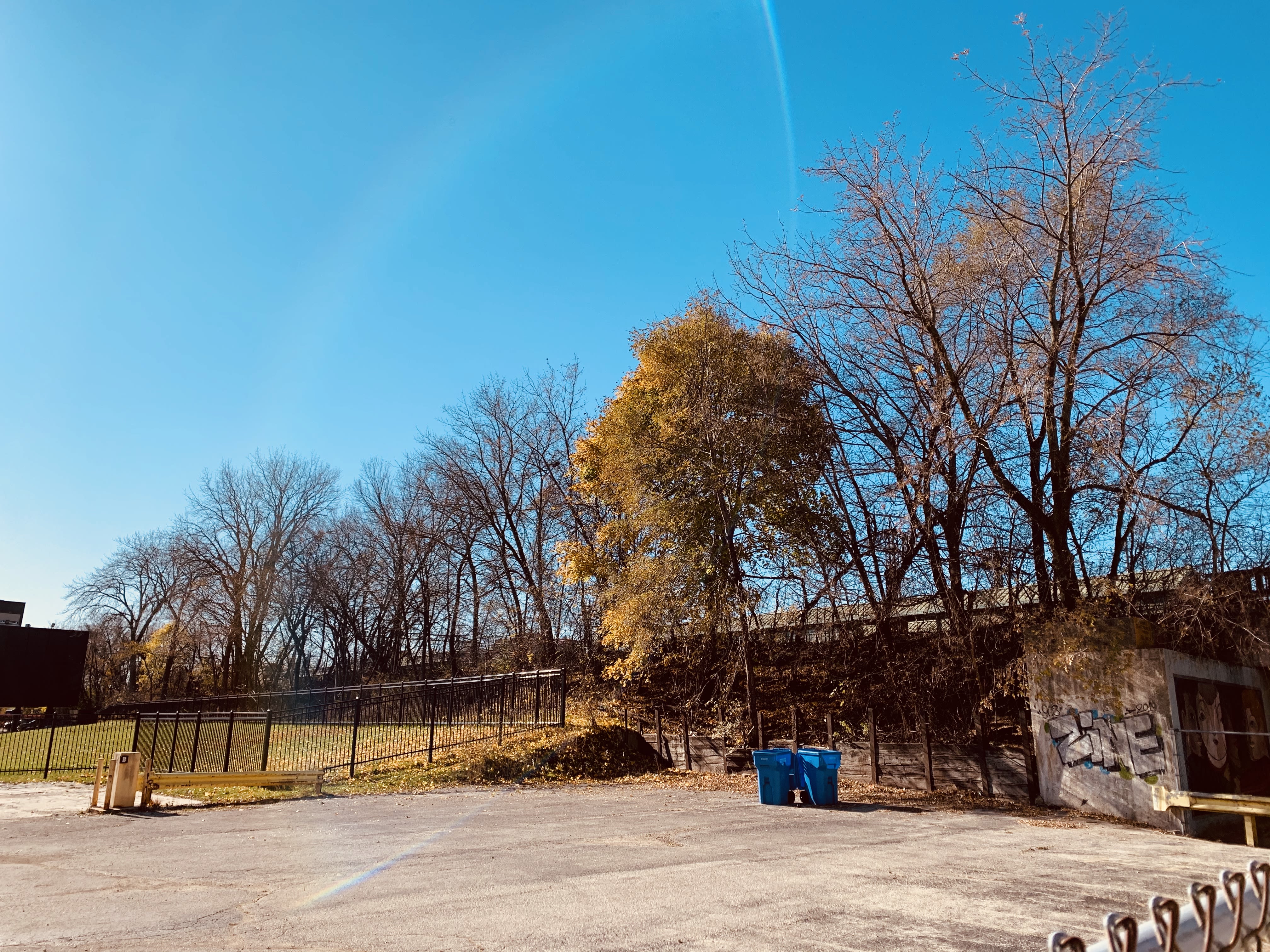
At the southwest corner of 56th St. and Stony Island Avenue, just across the street from the northwest corner of Jackson Park is a fenced parking lot. Grass and small ground cover plants grow out of cracks in the pavement.
My Norway Maple sits just above the southwest corner of the parking lot.
Roughly fifty yards north of my tree is the entrance to the 57th-56th-55th Metra Station which was created to serve the 1893 World's Fair.
White light from the underpass reflecting off of the parking lot, street, and buildings combined with the regular streetlights flood the entire intersection where my tree is located.
The absence of trees or buildings shading and blocking light make this intersection the emptiest and brightest in my area, day and night.
Grass and small plants fill the cracks in the pavement, creating opportunities for drainage and habitat for small life.
There are no trees along the sidewalk on Stony Island Ave or 56th Street.
Both streets are exceptionally wide at the intersection, despite experiencing only moderate vehicle traffic successfully regulated with an all way stop sign.
The sidewalks are also exceptionally wide despite experiencing infrequent pedestrian traffic, especially along Stony Island Ave.
There is only one building on this block, the Alpha Kappa Alpha sorority headquarters and it has a private parking garage with an entrance and exit on 57th Street.
The abundance of paved surfaces and lack of trees make this intersection an environment of extremes.
In the summer, the concrete, brick, and asphalt radiate heat with no shade to offer relief.
Flooding rarely causes serious problems at this intersection, likely because of the proximity to Jackson park and the grassy vacant lot just to the South. Still, large puddles create inconveniences for pedestrians at an already hostile, large intersection with no traffic signal.
Nearby high rises on the North edge of Jackson park create strong winds. While larger trees help mitigate the winds to the East, this intersection suffers from exposure again
A handful of small trees stand in and in front of the elementary school's play yard which is entirely paved over, including the playground and basketball court.
Though the school yard is set back and protected slightly from the wind, it is still susceptible to the extreme conditions.
A little farther East, more young trees appear along the sidewalk.
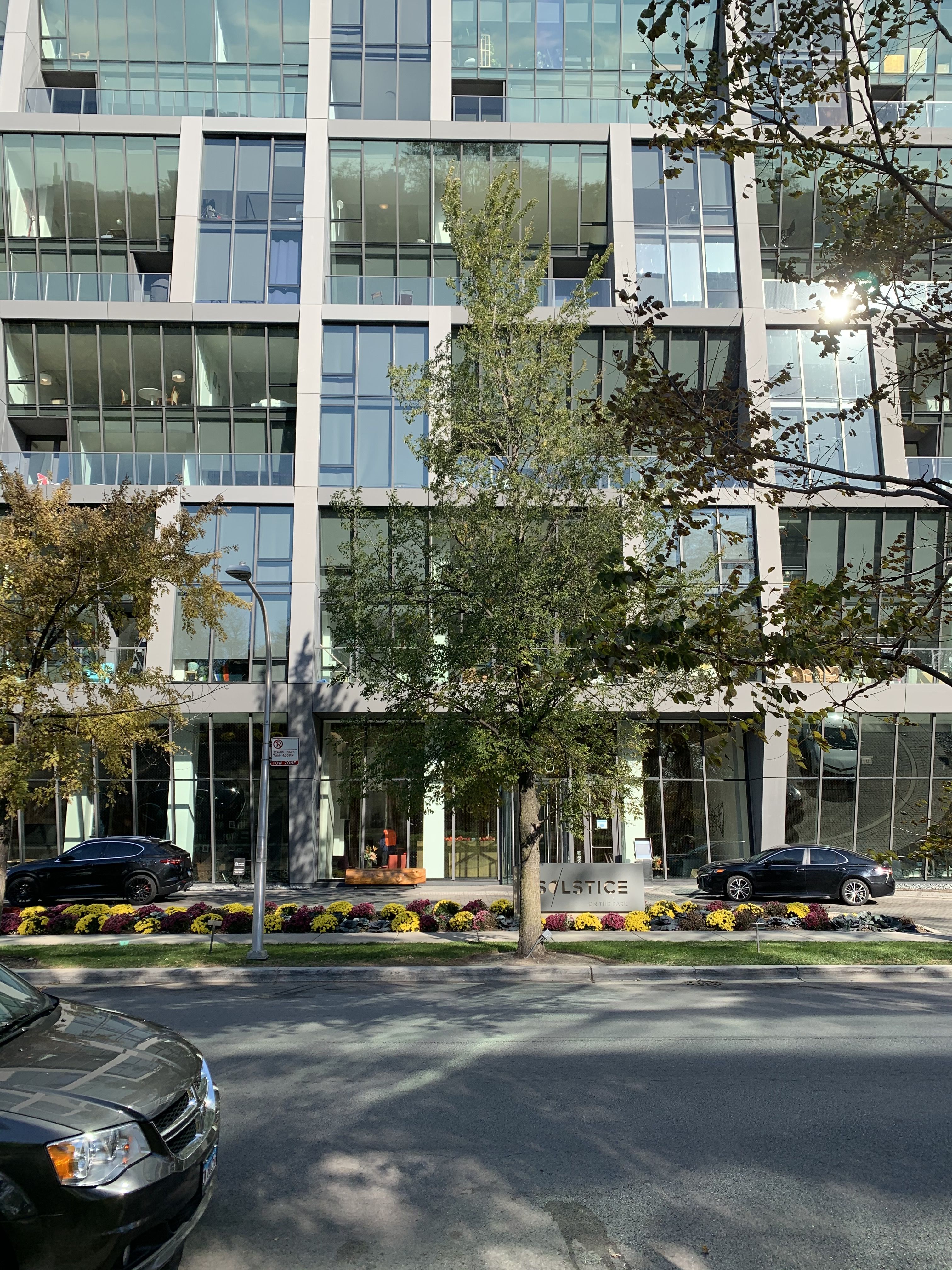
The towering Solstice apartments building which was completed just three years ago boasts a permeable brick driveway and an ornate planter which is carefully maintained and replanted entirely at least four times a year.
As a result, the plants found here are almost always in bloom, except in the depths of winter when they might fill the dirt with decoration.
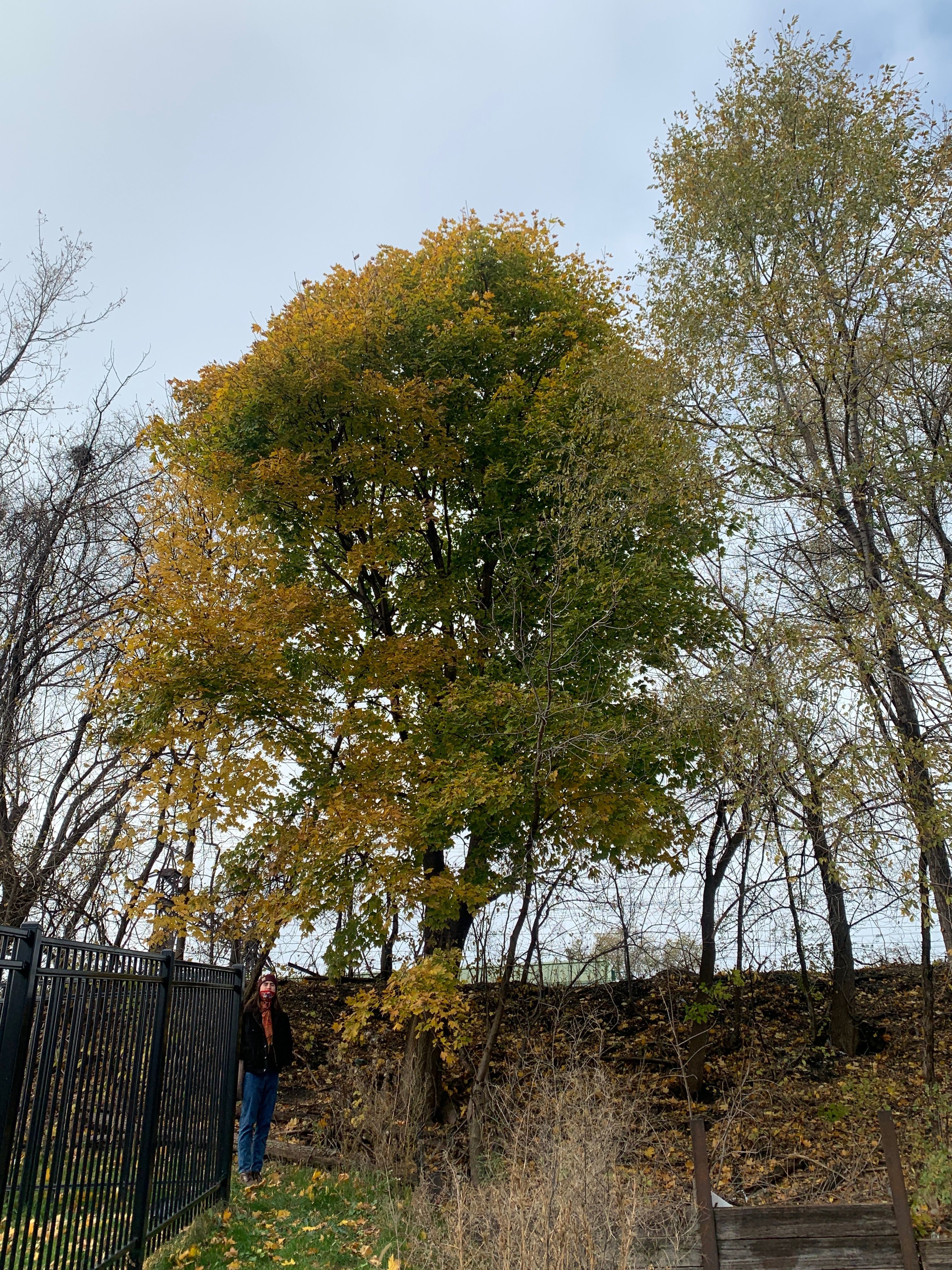
Despite its proximity to the grand Nature of Jackson Park, my tree sits in a corner of the urban environment experiencing extreme effects of weather and unmitigated noise, light, and other pollution from the street.
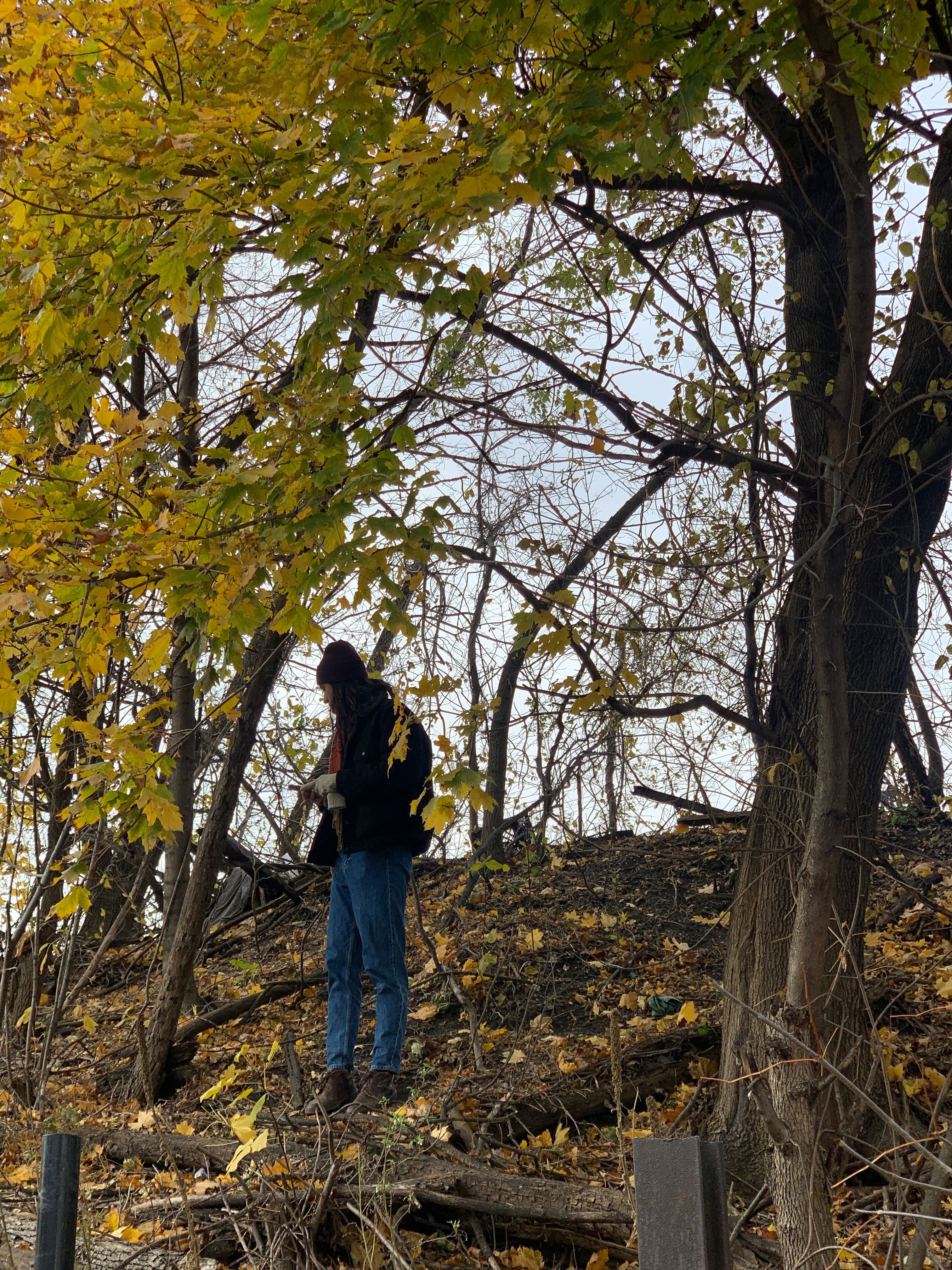
Ecological maintenance in Jackson Park and the maintenance of various small but intensely maintained planters and patches of grass along the sidewalks pay very little care or attention at the scale of this particular intersection, in opposite regards. Nevertheless, an abundance of tree and other species live and grow spontaneously in a novel unforgiving pocket of the urban environment.
Conclusion
As I learned to pay attention to the many spatial details of my tree and its surroundings, I discovered stark juxtapositions in time and space at the intersection of 56th and Stony Island.
Through weekly experiences in the urban environment, I found that every architectural, geographical, and topographical detail has an ecological story to be told in relation to its surroundings, from the magnificent distributions of fall colors, to a rocky little slope, to the cracked pavement and perfect planters.
Had I not noticed the patterns of yellow along the slope at my site, I never would have considered the ecological causes and consequences of sparse leaf litter on portions of the soil. Had I not personally scrambled up the rocky slope dozens of times, I would not have been as interested in those consequences.
As I began to pay closer attention to the scale of different practices and effects in the urban environment, I started to paint a more exciting picture of the nearby, filled with contradictions both contentious and striking as well as almost silent and invisible. At the scale of the whole intersection, my tree helps mitigate the effects of heat, wind, light, and flooding, but at a slightly finer scale, I witnessed the harms inflicted by my tree to biodiversity in my nearby through out-competing for sunlight and soil nutrients, and preventing the growth of diverse vegetation which might serve as a habitat for local biodiversity.
Overall, ecological processes in my nearby have been and continue to be driven and maintained by humans through a wide variety of practices at a wide variety of spatial scales. Practices serve as diverse purposes as human shelter and recreation, native biodiversity conservation, and pure aesthetics--both very small, artificial, and ornate as well as vast, naturalistic, and awe-inspiring.
Works Cited
Anderson, Rebecca. “Disturbance as a factor in the distribution of sugar maple and the invasion of the Norway maple into a modified Woodland” Rhodora, vol. 101, no. 907, New England Botanical Club, Inc., pp. 264–73. http://www.jstor.org/stable/23313394 1999
Martin, P.H. "Norway Maple (Acer platanoides) Invasion of a Natural Forest Stand: Understory Consequence and Regeneration Pattern." Biological Invasions 1, 215–222. 1999
“Norway Maple” New York Invasive Species (IS) Information. July 2, 2019. http://nyis.info/invasive_species/norway-maple/
Webb, Sara L., et al. “The Myth of the Resilient Forest: Case Study of the Invasive Norway Maple (Acer Platanoides)” Rhodora, vol. 102, no. 911, New England Botanical Club, Inc., 2000, pp. 332–54
 Built with Shorthand